
Life After Death: Notorious B.I.G. 15 Years Later

Christopher George Latore Wallace (May 21, 1972 – March 9, 1997), best known as The Notorious B.I.G., was an American rapper. He was also known as Biggie Smalls (after a character in the 1975 film Let’s Do It Again), Big Poppa, and The Black Frank White (after the main character of the 1990 film King of New York).
Wallace was raised in the Brooklyn borough of New York City. When Wallace released his debut album Ready to Die in 1994, he became a central figure in the East Coast hip-hop scene and increased New York’s visibility at a time when West Coast artists were more common in the mainstream. The following year, Wallace led his childhood friends to chart success through his protégé group, Junior M.A.F.I.A. While recording his second album, Wallace was heavily involved in the East Coast/West Coast hip-hop feud, dominating the scene at the time.
On March 9, 1997, Wallace was killed by an unknown assailant in a drive-by shooting in Los Angeles. His double-disc set Life After Death, released 15 days later, hit #1 on the U.S. album charts and was certified Diamond in 2000 (one of the few hip hop albums to receive this certification). Wallace was noted for his “loose, easy flow”, dark semi-autobiographical lyrics and storytelling abilities. Since his death, a further two albums have been released. MTV ranked him at #3 on their list of The Greatest MCs (Rappers) of All Time. He has certified sales of 17 million units in the United States.

Early life
Born in St. Mary’s Hospital, despite later claiming to be raised in the Bedford-Stuyvesant section of Brooklyn, Wallace grew up in neighboring Clinton Hill. Wallace was the only child of Voletta Wallace, a Jamaican preschool teacher, and George Latore, a welder and small-time Jamaican politician. His father left the family when Wallace was two years old, leaving his mother to work two jobs while raising him. At the Queen of All Saints Middle School, Wallace excelled in class, winning several awards as an English student. He was nicknamed “Big” because of his size before he turned 10. At the age of 12, he began selling drugs. His mother, often away at work, did not know that her son was selling drugs until Wallace was an adult.
At his request, Wallace transferred out of the private Roman Catholic Bishop Loughlin Memorial High School to attend the state-funded George Westinghouse Career and Technical Education High School. Jay-Z and Busta Rhymes were also students at that school. According to his mother, Wallace was still a good student, but developed a “smart-ass” attitude at the new school. At seventeen, Wallace dropped out of high school and became further involved in crime. In 1989, he was arrested on weapons charges in Brooklyn and sentenced to five years’ probation. In 1990, he was arrested on a violation of his probation. A year later, Wallace was arrested in North Carolina for dealing crack cocaine. He spent nine months behind bars until he made bail.
Rapping career
Wallace began rapping when he was a teenager. He would entertain people on the streets as well as perform with local groups, the Old Gold Brothers and the Techniques. After being released from prison, Wallace made a demo tape under the name Biggie Smalls, a reference to his childhood nickname and to his stature; he stood at 6′ 3″ (1.91 m) and weighed as much as 300 to 380 pounds according to differing accounts. The tape was reportedly made with no serious intent of getting a recording deal, but was promoted by New York-based DJ Mister Cee, who had previously worked with Big Daddy Kane, and was heard by the editor of The Source.
In March 1992, Wallace featured in The Source’s Unsigned Hype column, dedicated to aspiring rappers, and was invited to produce a recording with other unsigned artists in a move that was reportedly uncommon at the time. The demo tape was heard by Uptown Records A&R and record producer, Sean Combs, who arranged for a meeting with Wallace. He was signed to Uptown immediately and made an appearance on label mates, Heavy D & the Boyz’ “A Buncha Niggas” (from the album Blue Funk). Soon after signing his recording contract, Combs was fired from Uptown and started a new label. Wallace followed and in mid-1992, signed to Combs’ new imprint label, Bad Boy Records. On August 8, 1993, Wallace’s longtime girlfriend gave birth to his first child, T’yanna. Wallace continued selling drugs after the birth to support his daughter financially. Once Combs discovered this, he was made to quit.
Wallace gained exposure later in the year on a remix to Mary J. Blige’s single “Real Love”, under the pseudonym The Notorious B.I.G., the name he would record under for the remainder of his career, after finding the original moniker “Biggie Smalls” was already in use. “Real Love” peaked at #7 on the Billboard Hot 100 chart and was followed by a remix of Blige’s “What’s the 411?”. He continued this success, to a lesser extent, on remixes with Neneh Cherry (“Buddy X”) and reggae artist Super Cat (“Dolly My Baby”, also featuring Combs) in 1993. In April 1993, his solo track, “Party and Bullshit”, appeared on the Who’s the Man? soundtrack. In July 1994, he appeared alongside LL Cool J and Busta Rhymes on a remix to label mate Craig Mack’s “Flava in Ya Ear”, reaching #9 on the Hot 100.
Ready to Die and Marriage
On August 4, 1994, Wallace married singer Faith Evans after they met at a Bad Boy photoshoot. Four days later, Wallace had his first pop chart success as a solo artist with double A-side, “Juicy/Unbelievable”, which reached #27 as the lead single to his debut album.
Ready to Die was released on September 13, 1994, and reached #13 on the Billboard 200 chart, eventually being certified four times Platinum. The album, released at a time when West Coast hip hop was prominent in the U.S. charts, according to Rolling Stone, “almost single-handedly… shifted the focus back to East Coast rap”. It gained strong reviews on release and has received much praise in retrospect. In addition to “Juicy”, the record produced two hit singles; the Platinum-selling “Big Poppa”, which reached #1 on the U.S. rap chart, and “One More Chance” featuring Faith Evans, a loosely related remix of an album track and its best selling single.
I the opinion of this DJ (DJ Vybe), give me any MC track made since the death of Biggie and I know a track that that can blow it out the water. Biggie’s music is timeless and honestly I haven’t seen a rapper that can come close to taking the title. But for the record Jay-Z carries the torch.
Make sure you checkout my live broadcast this Friday, March 9th, 2012 for a Notorious Tribute and order the CD on my website as well.
Death of A Diva: Whitney Houston
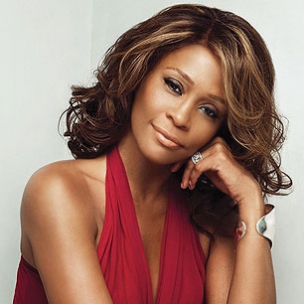
Whitney Elizabeth Houston (August 9, 1963 – February 11, 2012) was an American recording artist, actress, producer, and model. In 2009, the Guinness World Records cited her as the most-awarded female act of all time. Houston was also one of the world’s best-selling music artists, having sold over 170 million albums, singles and videos worldwide. Houston began singing with her New Jersey church’s junior gospel choir at age 11. After she began performing alongside her mother in night clubs in the New York City area, she was discovered by Arista Records label head Clive Davis. Houston released 7 studio albums and 3 movie soundtrack albums, all of which have diamond, multi-platinum, platinum or gold certification.
Houston is the only artist to chart seven consecutive No. 1 Billboard Hot 100 hits (“Saving All My Love for You”; “How Will I Know”; “Greatest Love of All”; “I Wanna Dance with Somebody (Who Loves Me)”; “Didn’t We Almost Have It All”; “So Emotional” and “Where Do Broken Hearts Go”). She is the second artist behind Elton John and the only female artist to have two number-one Billboard 200 Album awards (formerly “Top Pop Album”) on the Billboard magazine year-end charts (Whitney Houston and The Bodyguard: Original Soundtrack Album). Houston’s 1985 debut album Whitney Houston became the best-selling debut album by a female act at the time of its release. The album was named Rolling Stone’s best album of 1986, and was ranked at number 254 on Rolling Stone’s list of the 500 Greatest Albums of All Time. Her second studio album Whitney (1987) became the first album by a female artist to debut at number one on the Billboard 200 albums chart. Houston’s crossover appeal on the popular music charts as well as her prominence on MTV, starting with her video for “How Will I Know”, influenced several African-American female artists to follow in her footsteps.
Houston’s first acting role was as the star of the feature film The Bodyguard (1992). The film’s original soundtrack won the 1994 Grammy Award for Album of the Year. Its lead single “I Will Always Love You”, became the best-selling single by a female artist in music history. With the album, Houston became the first act (solo or group, male or female) to sell more than a million copies of an album within a single week period. The album makes her the top female act in the top 10 list of the best-selling albums of all time, at number four. Houston continued to star in movies and contribute to their soundtracks, including the films Waiting to Exhale (1995) and The Preacher’s Wife (1996). The Preacher’s Wife soundtrack became the best-selling gospel album in history. Three years after the release of her fourth studio album My Love Is Your Love (1998), she renewed her recording contract with Arista Records. She released her fifth studio album Just Whitney in 2002, and the Christmas-themed One Wish: The Holiday Album in 2003. In 2009, Houston released her seventh studio album I Look to You.
On February 11, 2012, Houston was found dead in her guest room at the Beverly Hilton Hotel, in Beverly Hills, California, of causes not immediately known. News of her death, the day before the 2012 Grammy Awards, dominated American and international media, especially cable news.
Support The Vybe
-
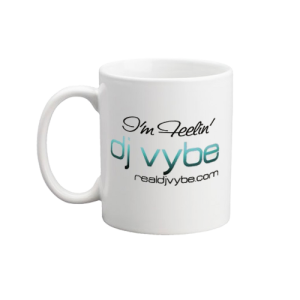 DJ Vybe Mug
Original price was: $16.95.$12.95Current price is: $12.95.